
3 Small Habits That Will Help You Learn Spanish Faster (Without Taking Classes Or Spending Money)
I talk a lot about the importance of exposure — the more you surround yourself with Spanish, the faster you learn. But I also know that most of my students are busy adults. You have a job, a family, a full schedule. The last thing you need is someone telling you to watch three hours of Spanish TV a day or listen to a podcast on your commute when you can barely keep your eyes open.
So here’s the good news: there are small, almost effortless things you can add to your daily routine that will help you practice and improve — sometimes without even realizing it. These are three of my favorites, and I recommend them to my students all the time.
1. Change Your Phone to Spanish
Okay, I’ll warn you upfront: this tip might make you want to hate me for the first week. And that’s completely normal.
Something that used to take you one minute — like adding a contact or adjusting your volume — might take twice as long at first. Everything will look unfamiliar, and your phone will suddenly feel like a stranger’s device.
But here’s what happens: because you need your phone every day, your brain adapts fast. Really fast. Within a week, you’ll know words like configuración (settings), agregar contacto (add contact), and subir volumen (raise volume) without ever sitting down to study them.
That’s real vocabulary, learned through real necessity. And the best part? You’re building the habit of reading Spanish without even noticing.
2. Look Up the Lyrics to a Song in Spanish
Pick a song you already like — it could be reggaetón, salsa, a Latin pop song, anything. Search for the lyrics and the English translation, and listen to the song while reading both.
Then do it again, this time with just the Spanish lyrics in front of you.
You’ll probably surprise yourself. A lot of the words will be ones you already know — you just couldn’t catch them when they were sung at full speed. This exercise trains your ear to recognize Spanish the way it actually sounds in real life: fast, natural, and connected.
The next time you hear that word — in a song, in a conversation, or on TV — your brain will recognize it immediately. That’s comprehension building, one song at a time.
3. Talk to Yourself in Spanish
I know, I know. It sounds a little silly. But I promise you — it works. And I speak from personal experience.
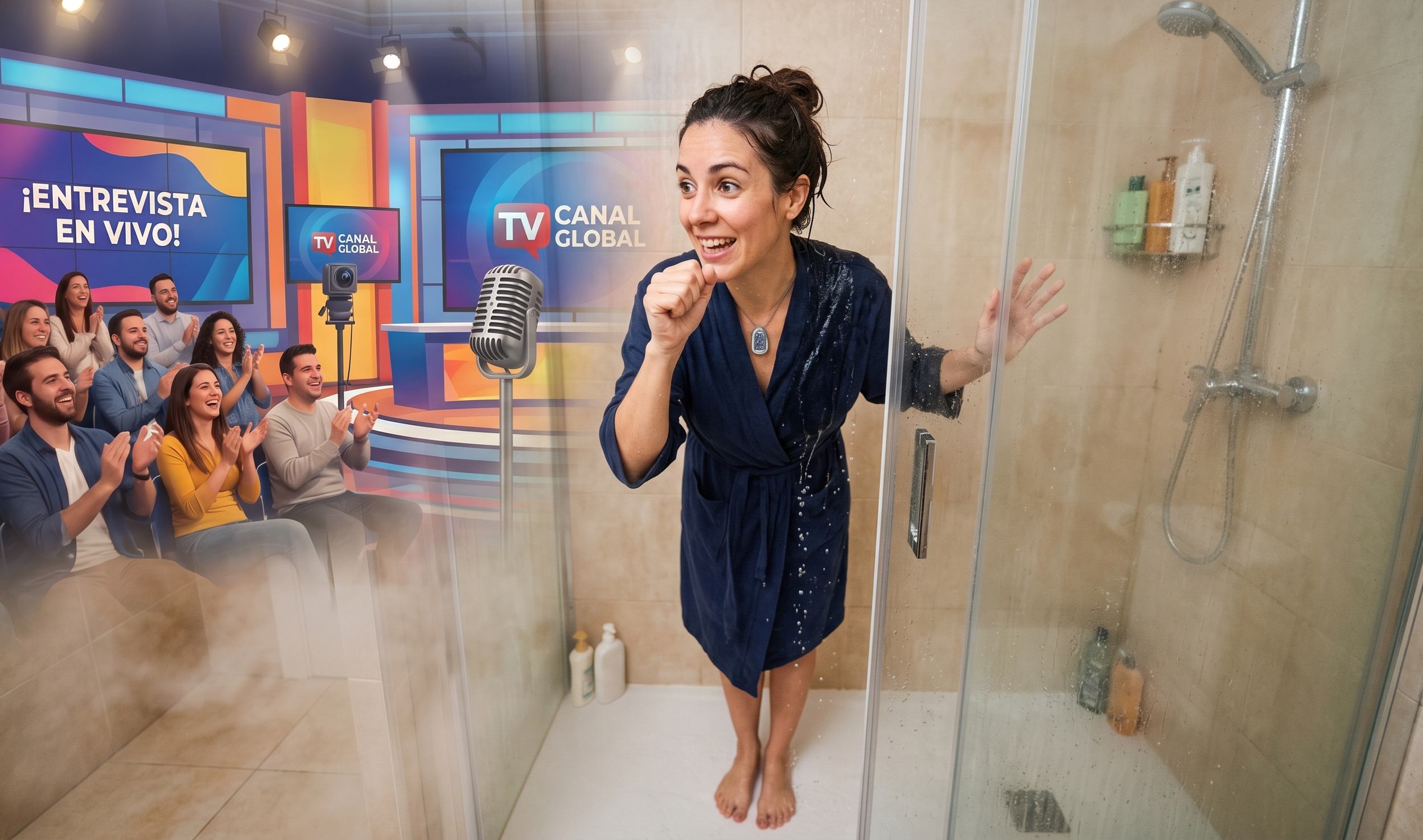
When I was learning English, I used to practice by myself all the time. I remember standing in the shower, pretending I was being interviewed for a magazine — answering questions about my business, my success story, all in English, completely alone. Did it feel ridiculous? A little. Did it help? Absolutely.
You can start small. Look around the room and name what you see: eso es una cama (that’s a bed), eso es una ventana (that’s a window). Then try talking about your day: ¿Qué hice hoy? (What did I do today?) Once you feel more comfortable, create little scenarios for yourself — ordering at a restaurant, introducing yourself at a party, asking for directions.
The goal isn’t to be perfect. The goal is to make your brain search for the words, to make Spanish feel like a language you use, not just a language you study.
Small Habits, Big Progress
None of these tips require you to sign up for anything, buy anything, or block out extra time in your day. They’re things you can weave into what you’re already doing — and over time, they add up.
That said, if you’re looking for something more — someone to practice conversation with, correct your mistakes in real time, and guide you on exactly where to focus — private online lessons are still the most effective way to improve.
At Spanish Now Academy, we offer private, one-on-one Spanish lessons with native Latin American tutors, from the comfort of your home, at a pace that works for you. If you’re curious, I’d love for you to try a free trial lesson and see how it feels.
Book your free trial at spanishnow.academy
