
How Long Does It Take to Learn Spanish? (The Honest Answer)
This is probably the question I get asked the most. And I totally get it — before you invest your time, energy, and money into something, you want to know what you're signing up for.
So let me give you the honest answer. Not the one that makes you sign up for a course right away, but the one that will actually help you set realistic expectations and — more importantly — keep you going when learning feels slow.
The truth is: it depends. I know, I know — that's not the satisfying answer you were hoping for. But stick with me, because I want to share an analogy that I think explains it better than any number of weeks or study hours ever could.
Learning Spanish Is a Lot Like Learning to Cook
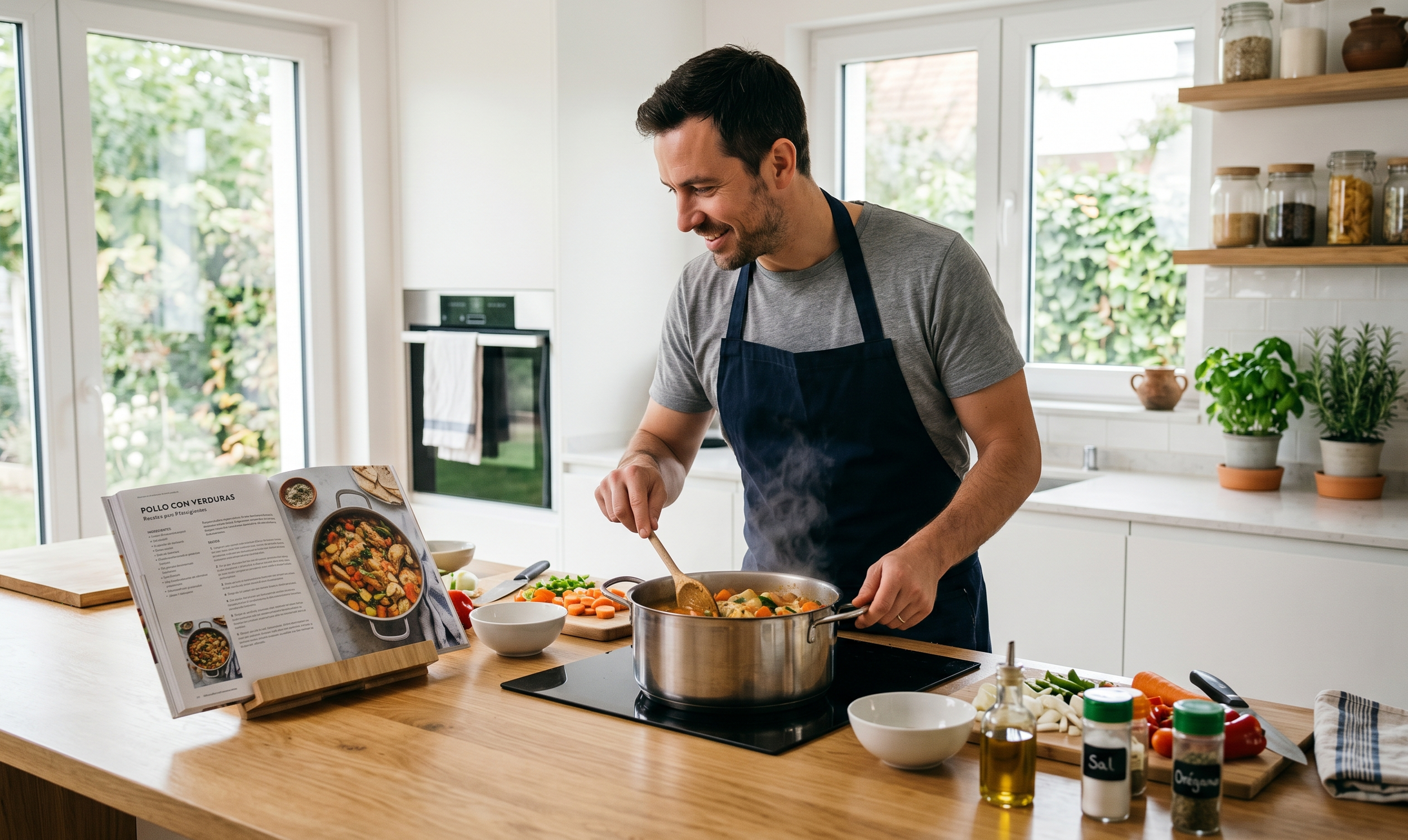
Think about the last time you decided to try a new recipe. Maybe you were scrolling through Instagram, saw something that looked amazing, and thought: "I'm making that this weekend."
So you looked it up, bought the ingredients, followed the steps, and a couple of hours later — dinner was on the table. Not perfect, maybe. But it worked. People ate. Mission accomplished.
Now, two weeks later, you want to make that same dish again. You remember the general idea — the main ingredients, the basic steps — but some of the details are fuzzy. How much salt? What temperature? Do you peel the potatoes before or after you cut them?
You go back to the recipe. You figure it out again. A little faster this time, but still not quite automatic.
But then you make it a third time. And a fourth. And by that point, you don't need the recipe anymore. You're doing it from memory. You're even tweaking it — a little more garlic here, a pinch of something different there — because you actually understand what you're doing now.
That's exactly how Spanish works. The first time you learn a grammar structure or a new set of vocabulary, it might make sense in the moment. But if you don't come back to it, practice it, and use it again and again, it won't stick. It'll be like that recipe you made once and then forgot.
So, How Fast Can You Learn?
Here's what I've seen in my years of teaching: the students who progress fastest are not necessarily the ones who take more classes. They're the ones who are consistent.
A student who shows up inconsistently, never practices between sessions, and waits for Spanish to come to them — they usually feel stuck. And it's frustrating, because they're putting in effort but not seeing results.
On the other hand, a student who practices a little every day — even 10 or 15 minutes — reviews what we covered in class, listens to Spanish in the car or while cooking, and doesn't wait for the "perfect" moment to practice? That student surprises themselves with how quickly things start to click.
The recipe doesn't cook itself. You have to get in the kitchen.
What Does Progress Actually Look Like?
I want to be real with you here, because I think a lot of apps and courses set unfair expectations. You're not going to be fluent in 30 days. But here's what you can realistically expect if you're consistent:
In the first few weeks: You'll start recognizing patterns, understanding some words in context, and feeling more comfortable with the sounds of the language and reading.
After a couple of months: You'll be able to introduce yourself, talk about your routine, activities, and things that you like, ask questions, and follow along in simple conversations.
After six months to a year of consistent practice: You'll start thinking in Spanish, catching yourself understanding things without translating, and having real conversations — even if they're imperfect.
And imperfect is perfectly okay. My husband (a native English speaker) still laughs at some of the things I said when I was learning English. The goal isn't perfection — the goal is communication.
I have two students who started at the same time from a beginner level. Both of them had one class per week. One of them, after only five months, was already having full conversation lessons with limited vocabulary and verb tenses, but still able to communicate and tell me about his life while I told him about mine.
Meanwhile, after five months, the second student was still struggling to remember words and build sentences correctly.
Why was there such a big difference between these two students?
The answer is simple: the second student only had one hour of exposure to the language per week, while the first student had one hour of class plus 15 minutes of Duolingo every day, 30 minutes of Spanish podcasts during lunch, some practice on weekends with his Colombian friend, and time reviewing lesson material before the next class.
The Secret Ingredient? Cook as much as you can.
One thing I always tell my students is that our class together is just the recipe. The real learning happens when you take what we practiced and bring it into your actual life.
That might look like listening to a Latin American podcast during your commute. Watching a telenovela with subtitles. Texting a Spanish-speaking colleague a sentence or two. Or even just narrating what you're doing at home — Estoy preparando el café. ¿Y tú? (I'm making coffee. And you?)
The more you "cook," the faster you'll stop needing the recipe.
Ready to Start Learning?
At Spanish Now Academy, we don't just teach you grammar rules and vocabulary lists. We practice real conversations together, in a relaxed and encouraging space where making mistakes is part of the process.
If you're ready to be consistent, to show up, and to actually use Spanish — I'd love to be your guide in this journey.
Book a free trial lesson at spanishnow.academy and let's get started. No pressure, no perfection required — just a real conversation and a plan that works for you.
— Gaby
